A fall in crude oil price and Aramco's $75 billion annual dividend commitment may have delayed Saudi company picking a stake in Reliance Industries Ltd's oil-to-chemical unit (O2C), research firm Jefferies said. Richest Indian Mukesh Ambani had in August 2019 announced talks for the sale of a 20 per cent stake in the O2C business, which comprises its twin oil refineries at Jamnagar in Gujarat and petrochemical assets, to the world's largest oil exporter. The deal was to conclude by March 2020 but has been delayed for reasons not disclosed by either company.
The growth in production of eight key infrastructure sectors slowed down to a 20-month low of 4 per cent in June this year due to a decline in the output of crude oil and refinery products, according to official data released on Wednesday. The core sectors' production grew by 6.4 per cent in May 2024. The growth of core sectors -- coal, crude oil, natural gas, refinery products, fertiliser, steel, cement and electricity -- was 8.4 per cent in June 2023.

The oil industry experienced three upheavals between 1973 and 1991, which seem to be etched in the memory of the industry's decision makers. Naturally, at the sign of a new crisis, the decision makers like to dip into those tumultuous decades to find ways to deal with the new shock, in addition, of course, to expert reports and forecasts. So, the industry bigwigs turned the pages of history to get a peek into the future of oil price movements after Russia invaded Ukraine in 2022, Israel attacked Gaza in 2023, Iran-linked Houthi rebels pounded tankers crossing the Red Sea in support of Palestine the same year, and Iran rained missiles on Israel in 2024.

Raj also justified his support to Prime Minister Narendra Modi, citing the construction of the Ram Temple and abrogation of Article 370 among other reasons.
The medium-term scenario for oil marketing companies (OMCs) is high risk due to the surging crude and gas prices. Apart from OPEC-plus cutting production, the Hamas-Israel conflict has caused fears of supply disruption. The July-September quarter of 2023-24 (Q2FY24) saw positive surprises for OMCs. Strong gross refining margins (GRMs) more than offset weak marketing margins.
BPCL is a high revenue-earning public-sector undertaking (PSU) and plans to privatise it are completely off the table, Petroleum and Natural Gas Minister Hardeep Singh Puri said on Tuesday after assuming charge of the ministry for the second time. "Why would we divest ourselves of highly successful Maharatnas like BPCL," Puri said, arguing the Centre was not in favour of divesting its stake in oil PSUs.
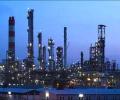
These refineries, commissioned mostly in the 1950s and 1960s during India's early industrialisation push, are inefficient and costly to maintain compared to their modern counterparts on the coast mainly operated by private companies.

To be second Indian company after Essar to have a refinery abroad
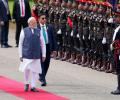
'Granting the country's highest civilian honour to Prime Minister Modi was surprising as it indicated the government was going out of its way to have India as a close partner.'

In the late 1990s, the Gujarat government had issued a policy allowing deferment of sales tax/VAT up to a certain amount, with the benefit capped for a period not exceeding 17 years. Projects with investment over Rs 1,000 crore could be eligible for the tax benefit. A deferment benefit on sale tax means a dealer is allowed to postpone the payment of tax on purchase of raw materials sales of products for a fixed period or/and up to a specific monetary limit.
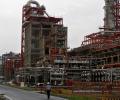
Rosneft bought a 49 per cent stake in Essar Oil's refinery port and petrol pumps, while Netherlands-based Trafigura Group Pte, one of the world's biggest commodity trading companies, and Russian investment fund United Capital Partners split another 49 per cent equity equally.
The growth in production of eight key infrastructure sectors slowed down to 6.1 per cent in July this year due to a decline in the output of crude oil and natural gas, according to official data released on Friday. The growth rate, however, is up from 5.1 per cent in June.

Among top losers, Reliance Industries (RIL) sank over 4 per cent, after the company shelved a proposed deal to sell a 20 per cent stake in its oil refinery and petrochemical business to Saudi Aramco for $15 billion. Other laggards included Bajaj Finance, Bajaj Finserv, NTPC, SBI and Titan.

HPCL is now ready to increase the stake of the state government up to 49 per cent.

The unexpected missile attack on a second India-bound ship carrying Russian crude, just three weeks after the first, has complicated matters for domestic refiners. India now counts the Vladimir Putin-led nation as its biggest oil supplier, according to Paris-based market intelligence agency Kpler, and these attacks come on top of US sanctions since December, where vessels that bring crude to India are facing heightened scrutiny. Panama-registered Pollux, which loaded crude at the Sheshkaris oil terminal in the Russian port of Novorossiysk on January 24, was scheduled to deliver the medium, sour Urals grade to Paradip port on February 28.
India's crude oil import bill is set to exceed $100 billion in the current fiscal year ending March 31, almost double its spending last year, as international oil prices trade at seven-year highs. India spent $94.3 billion in the first 10 months (April-January) of the ongoing financial year that started April 1, 2021, according to data from the oil ministry's Petroleum Planning & Analysis Cell (PPAC). It spent $11.6 billion in January alone when oil prices had started to surge.

According to sources, Russian energy giant Rosneft or its affiliates, Saudi Aramco and Reliance Industries are in race for BPCL's three refineries - Mumbai, Kochi in Kerala and Bina in Madhya Pradesh - 16,309 petrol pumps, 6,113 LPG distributor agencies and more than a fifth of 256 aviation fuel stations in the country.

'When you take up a religion or religious issue in an election, it creates a different type of environment and it is not a good thing'

India is expected to ramp up its purchase of crude oil from the United Arab Emirates (UAE) in the coming months following discussions between the two countries on the sidelines of the ongoing COP28 summit in Dubai, multiple sources in the know said. The UAE has historically been India's third-largest source of crude. It has suffered the largest drop in shipments since Indian refiners began to binge on Russian crude in 2022.

The government has cut the windfall profit tax on crude oil produced in the country while the levy on exports of diesel and ATF has been hiked, an official notification said. The tax, levied in the form of special additional excise duty or SAED, on domestically produced crude oil was reduced to Rs 6,700 per tonne from Rs 7,100 a tonne. SAED on the export of diesel was increased to Rs 6 per litre from Rs 5.50 a litre and on jet fuel or ATF to Rs 4 per litre from Rs 2, the notification said.
India, the world's third largest oil consuming and importing nation, in July bought $2.8 billion worth of crude oil from Russia, second only to China which remains the largest importer of Russian oil, a report said. Russia emerged as India's biggest supplier of crude oil, which is converted into fuels like petrol and diesel in refineries, after Russian oil was available on discount following some European nations shunning purchases from Moscow over its invasion of Ukraine in February 2022.

Sluggish infrastructure sector growth would also have impact on IIP as these segments account for about 41 per cent of the total factory output.

Indian companies are generating more cash than ever. The net cash flow from listed firms' operations hit a new high of Rs 11.1 trillion in financial year 2023-24 (FY24), crossing the Rs 10-trillion mark for the first time, according to the Centre for Monitoring Indian Economy (CMIE) data going back to 1990-91. The FY24 figure represents a 19.3 per cent jump over the previous year, even as quite a few companies are yet to release their numbers.
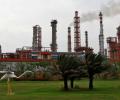
'One investor told us one leader in Gujarat had sent him to Konkan to buy land.' 'How did these people come to know about this project in advance when locals didn't know?' 'It means those who are running the country are somewhere interested in selling the country's resources to private businessmen.'

Ambani is banking on new businesses to boost profit as earnings from producing oil and natural gas has slowed in the past three years.

Reliance Industries Ltd invested over $125 billion in the last ten years as it undertook massive expansion in hydrocarbon and telecom businesses, a report said, estimating that the conglomerate's investments in the next three years would be in relatively less capex-heavy retail and upstream new energy. Reliance is coming out of a series of long and intensive capex cycles (hydrocarbons and telecom).

'He asserted in his usual jovial style that he was not an MBA like his audience at IIM-Ahmedabad but perhaps had an even better business degree: MBB'. 'He went on to explain to his perplexed, blue chip B-School audience that MBB stood for "Marwadi by birth"!' Shivanand Kanavi salutes Shashi Ruia, co-founder of the Essar group who passed into the ages on November 25, 2024 in Mumbai.

Billionaire Mukesh Ambani on Thursday unveiled the next phase of growth at Reliance Industries Ltd, with retail and telecom worth over $100 billion each, doubling revenues and pre-tax profit in 3-4 years, new energy business becoming profitable by 2031, and core oil and chemical business continuing to be the robust growth engine. The sprawling conglomerate with interests in refining, oil and gas, petrochemicals, telecom, retail, and media is on track to more than double in size before the end of the decade, Ambani, chairman and managing director of Reliance, told company shareholders.
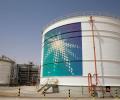
Estimated to cost $44 billion, the project was expected to be commissioned by 2025.
The growth of these core sectors -- coal, crude oil, natural gas, refinery products, fertiliser, steel, cement and electricity -- was 4.6 per cent in April 2023.
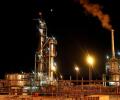
India was the world's biggest importer of Russian oil in February, exceeding China by 20 million barrels.
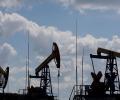
India's imports of crude oil from Russia touched a new high of 1.64 million barrels per day in March and is now double of the purchases from Iraq - the nation's traditional top oil supplier. But the purchases appear to have plateaued as growth has slowed. Russia continued to be the single largest supplier of crude oil, which is converted into petrol and diesel at refineries, for a sixth straight month by supplying more than one-third of all oil India imported, according to energy cargo tracker Vortexa.
Reliance Industries will set up a 50,000 barrels per day refinery in Yemen, where it has already picked up stake in two oil blocks.
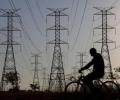
The growth of eight key infrastructure sectors slowed to a 15-month low of 3.6 per cent in January, on account of poor performance of sectors like refinery products, fertiliser, steel and electricity, according to the official data released on Thursday. The growth of eight core sectors -- coal, crude oil, natural gas, refinery products, fertiliser, steel, cement and electricity -- was 4.9 per cent in December. It was 9.7 per cent in January 2023.

A spokesman for Gibraltar's government also confirmed that police proceedings against four members of the crew had ended.

Slow growth in the key sectors would have implications on the IIP number as these segments account for about 41 per cent of the total factory output.

India will soon meet Iraq and the United Arab Emirates (UAE) to seek a definitive rate of discount on crude oil similar to what Russia has provided so far, sources said. Multiple officials and industry executives said Iraq, which is India's biggest oil supplier, wants to discuss the level of discounts expected by Indian refiners. India's focus on snapping up ever-increasing volumes of Russian crude oil has led to a corresponding decline in imports from the Middle East. Flows from Iraq, Saudi Arabia, and the UAE have suffered as a result.

India's import of cheap Russian oil scaled another record in May and is now more than the combined oil bought from Saudi Arabia, Iraq, UAE and the US, industry data showed. India took 1.96 million barrels a day from Russia in May, 15 per cent more than the previous high in April, according to data from energy cargo tracker Vortexa. Russia now makes up for nearly 42 per cent of all crude oil India imported in May.

Putin is keen on establishing a good personal rapport with Trump and anchor a meaningful US-Russia partnership, realistic enough to accept that Trump is as good an American president as Russia would ever get, observes Ambassador M K Bhadrakumar.

A preliminary deal for sale of 49 per cent in Essar Oil to Rosneft was signed between the companies in July 2015.
 © 2026 Rediff.com - Advertise with us - Disclaimer - Privacy Policy - Sitemap - Feedback - About us - Terms of use - Grievances